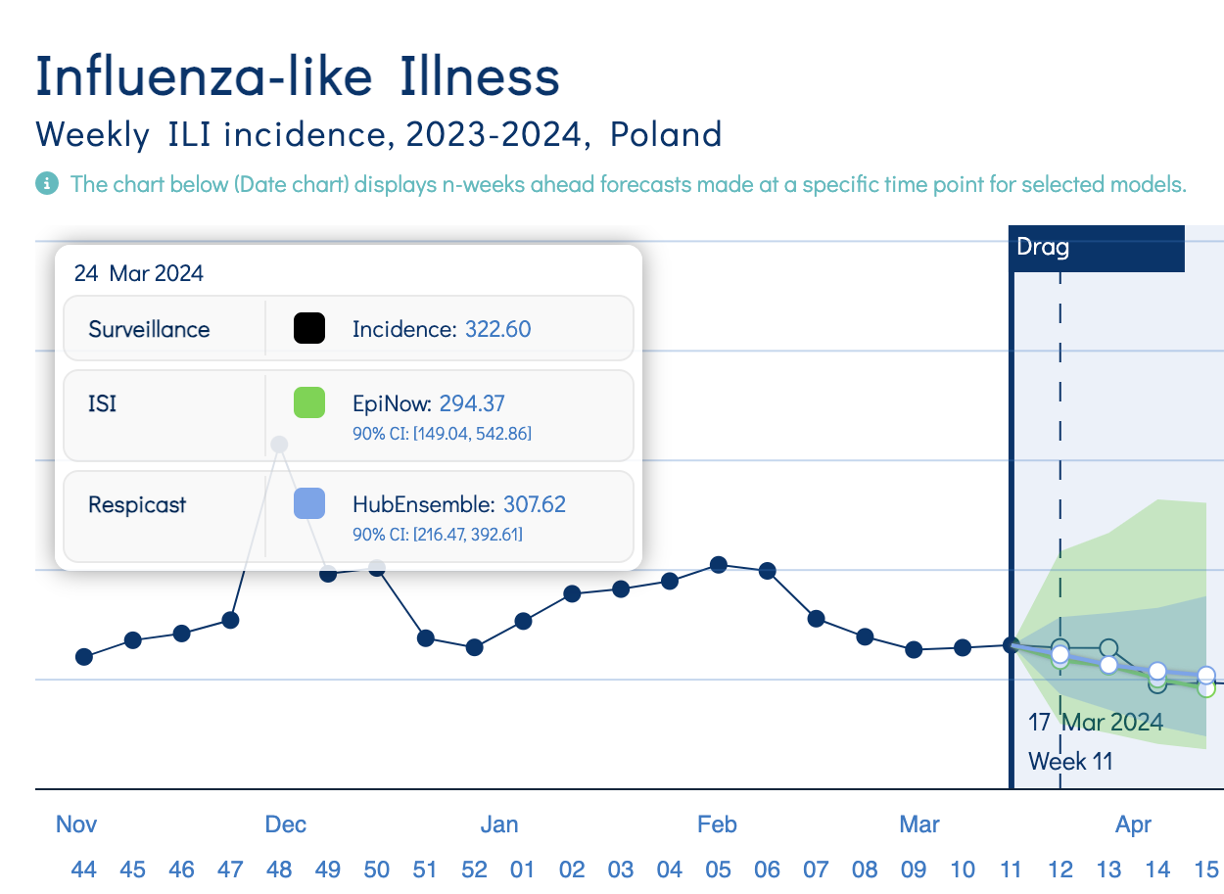
Multi-model ensembles
Ensembles: many forecasts into one
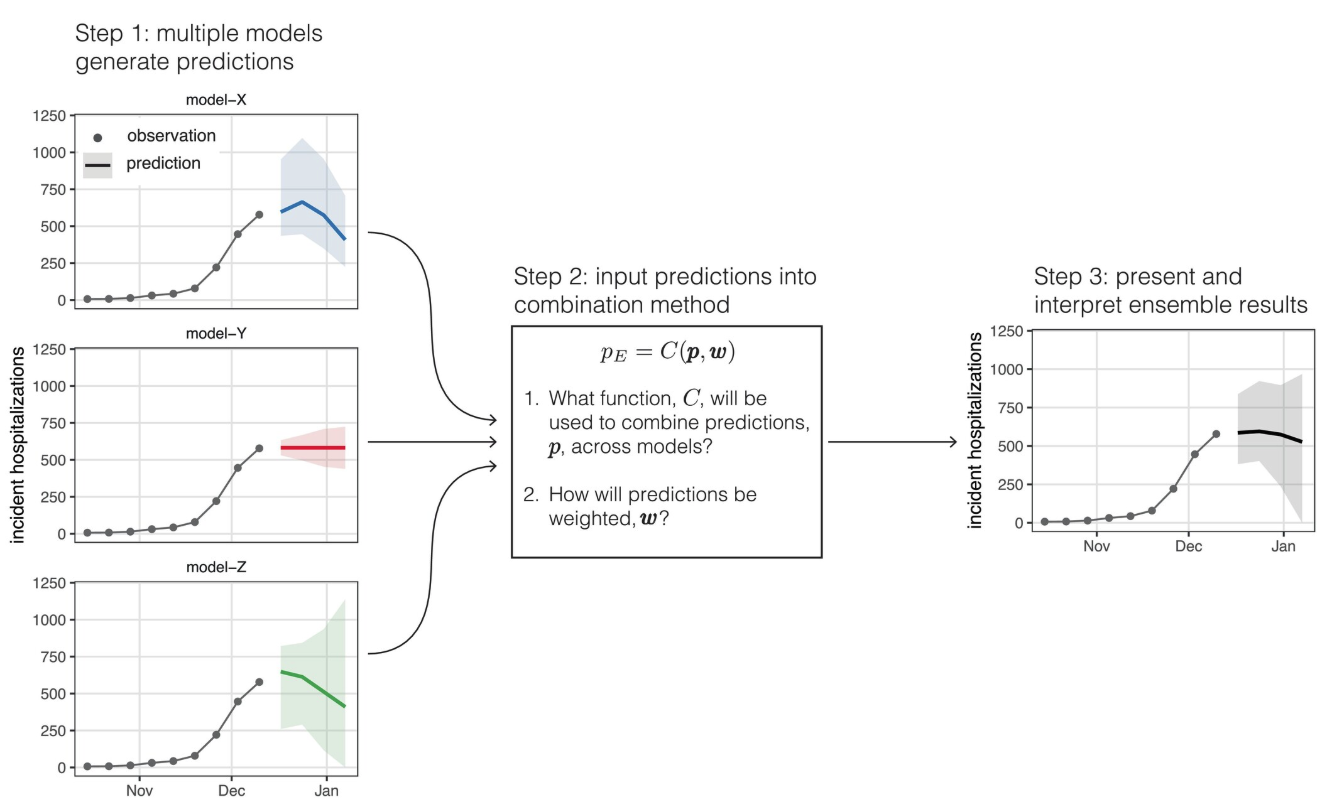
Figure credit (Shandross et al. 2026)
Ensemble methods: how to average?
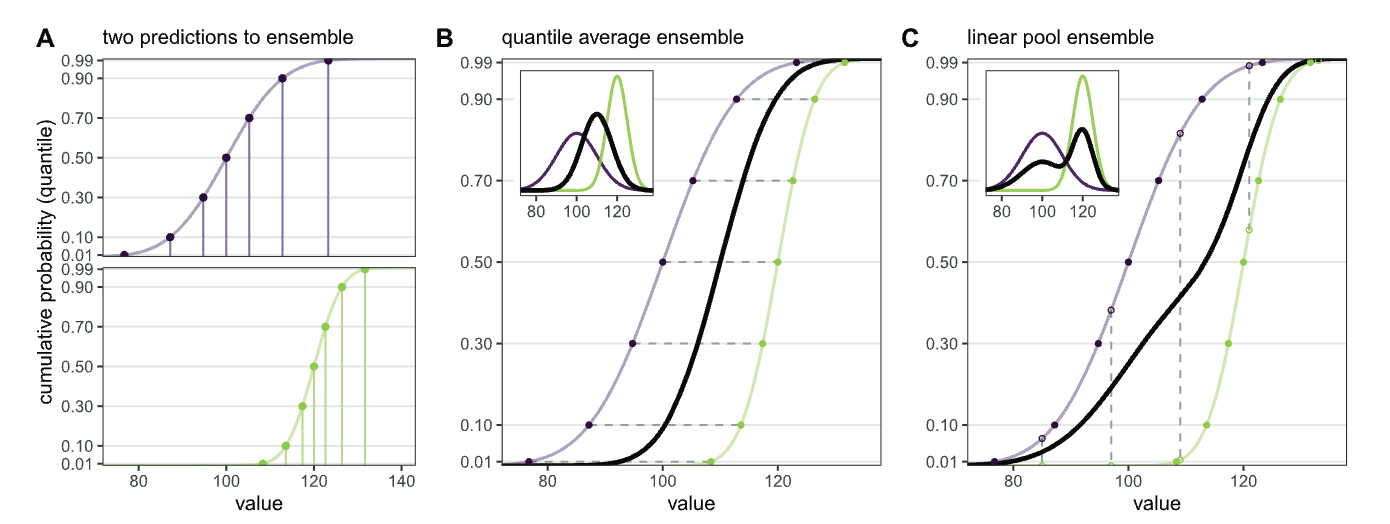
Figure credit: Shandross et al. (2026)
Linear opinion pool ensemble
Let \(F_m(x)\) be a cumulative density function (CDF) given by forecast model \(m\).
\[F_{LOP}(x) = \sum_{m=1}^M w_m F_m(x) \]
Figure credit: Shandross et al. (2026)
Quantile (Vincent) average ensemble
Let \(F_m^{-1}(\theta)\) be the inverse CDF, or the quantile function, for quantile level \(\theta\).
\[F_Q^{-1}(\theta) = \sum_{m=1}^M w_m F_m^{-1}(\theta) \]
Figure credit: (Shandross et al. 2026)
Collaborative modelling “hubs”
Projects run by research groups, public health agencies
Participation generally open
Standard format enables
- data validation
- ensemble-building
- model evaluation
- visualization
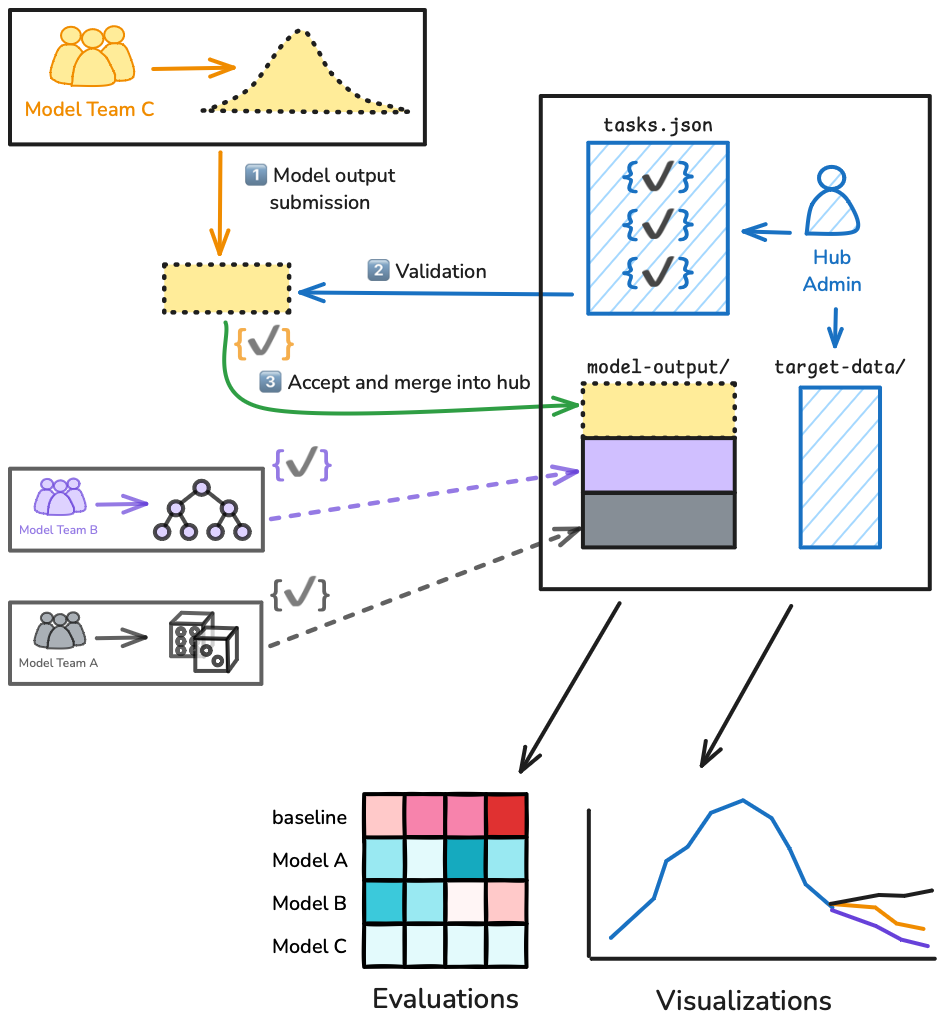
Hubs increasingly used in epi
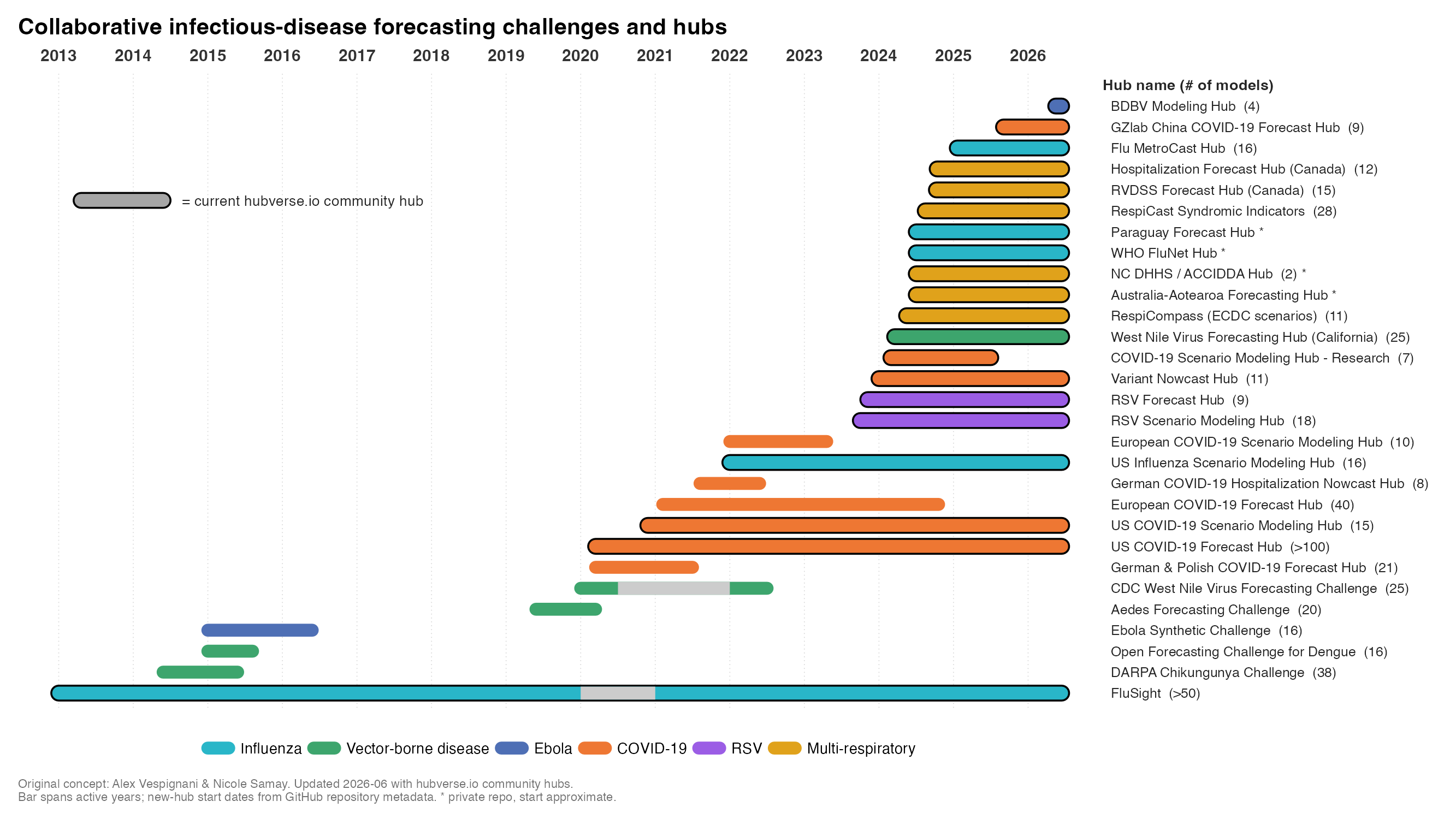
Reich et al. (2022)
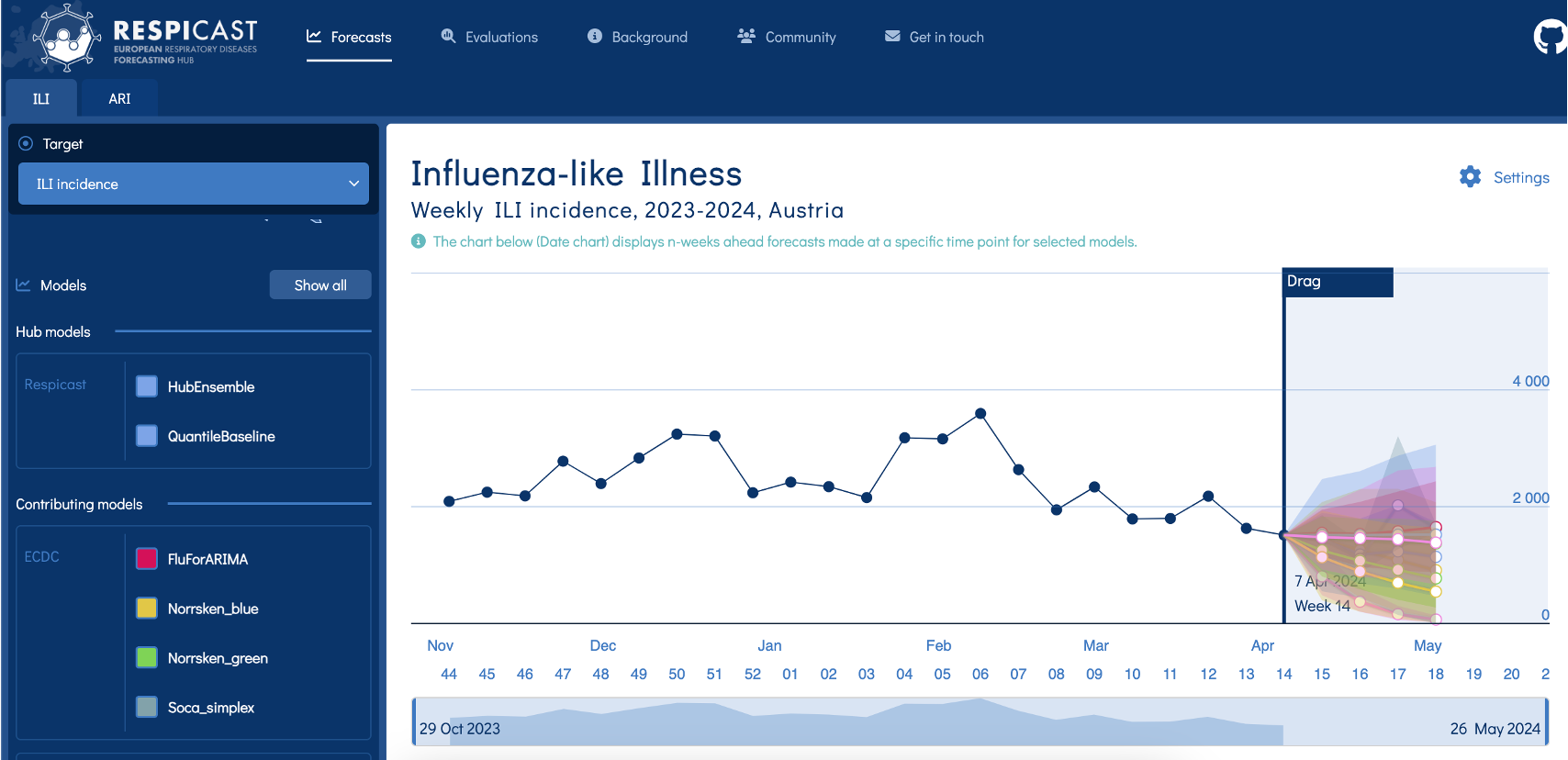
… e.g., the European Respicast Hub
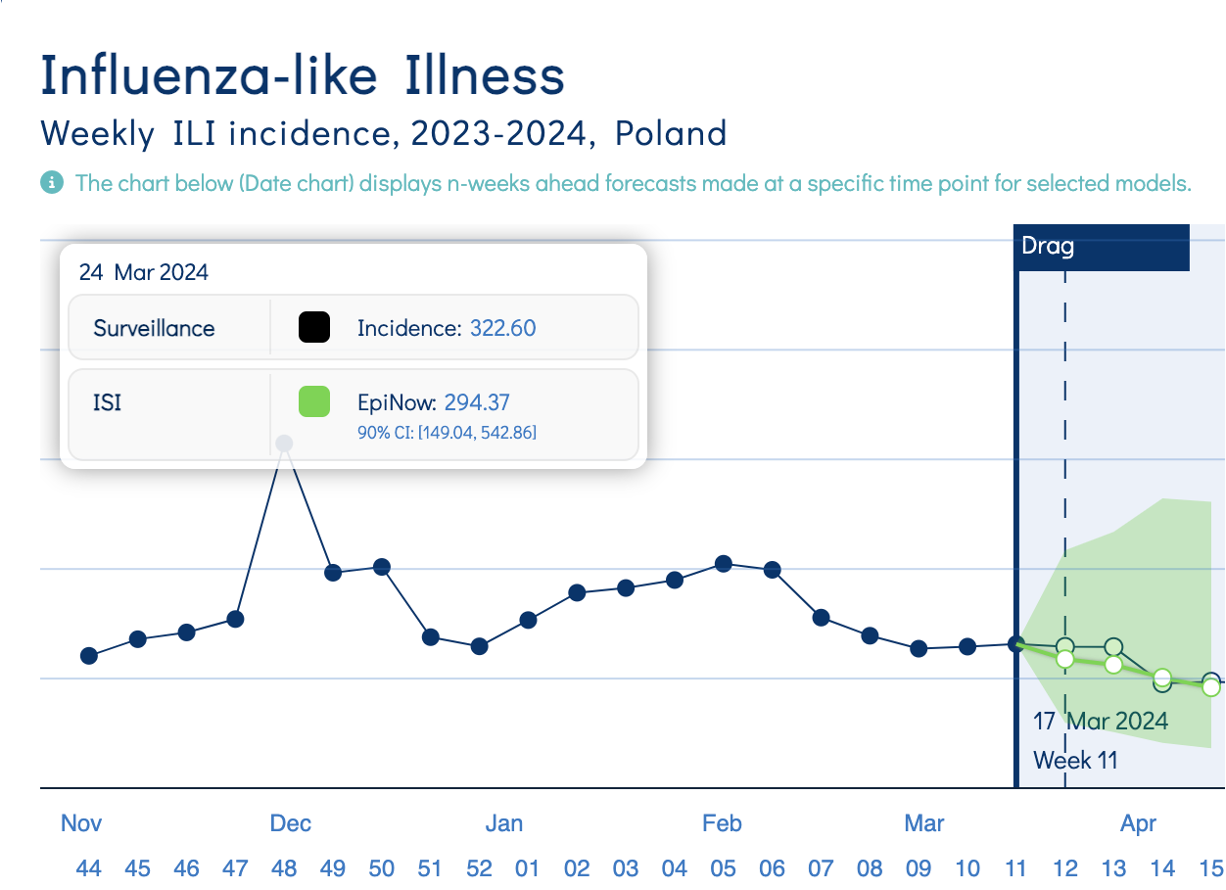
Single model
… Multiple models
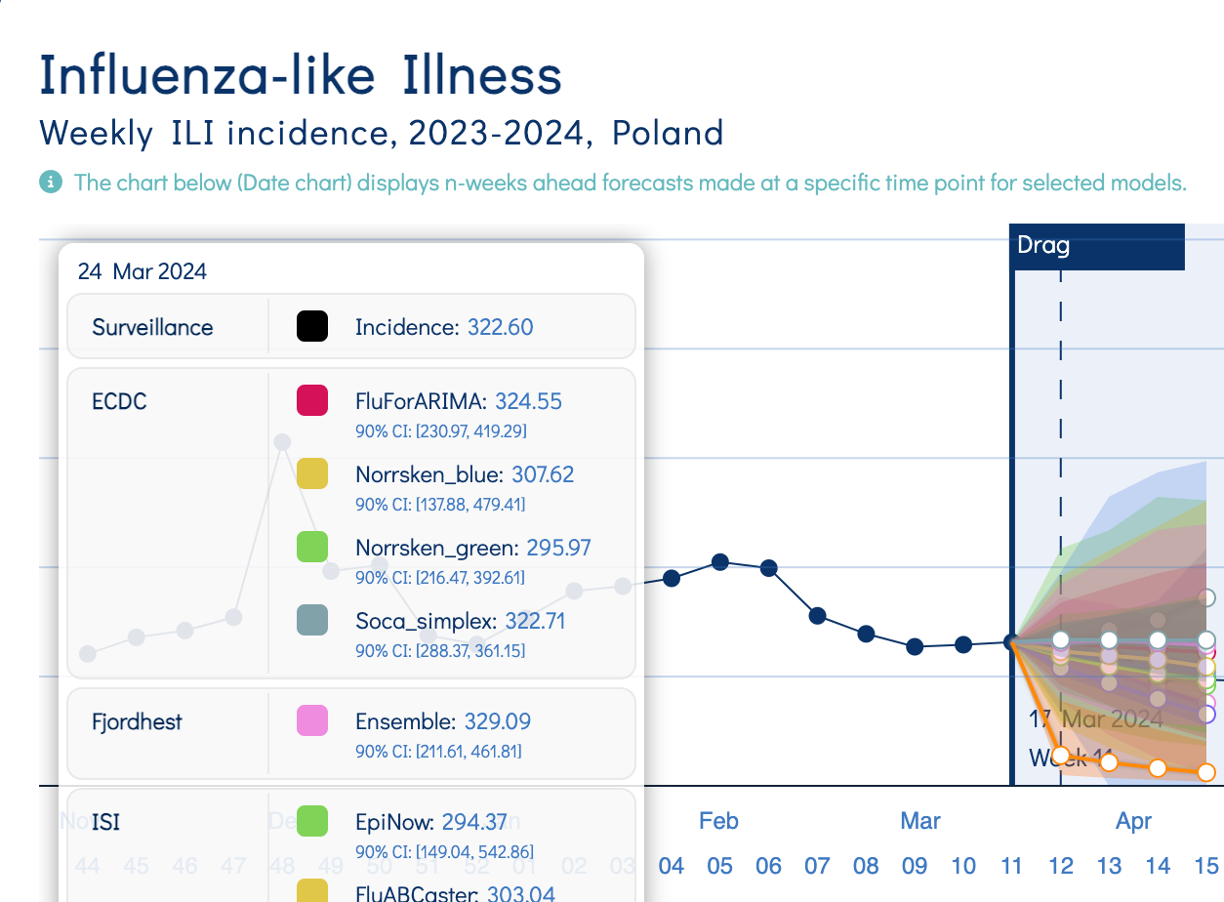
… … Multi-model ensemble