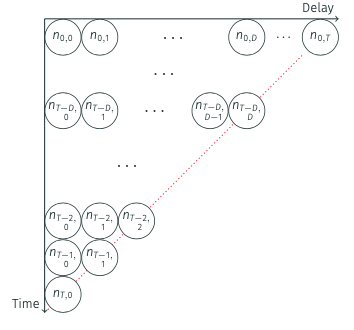
End of course summary
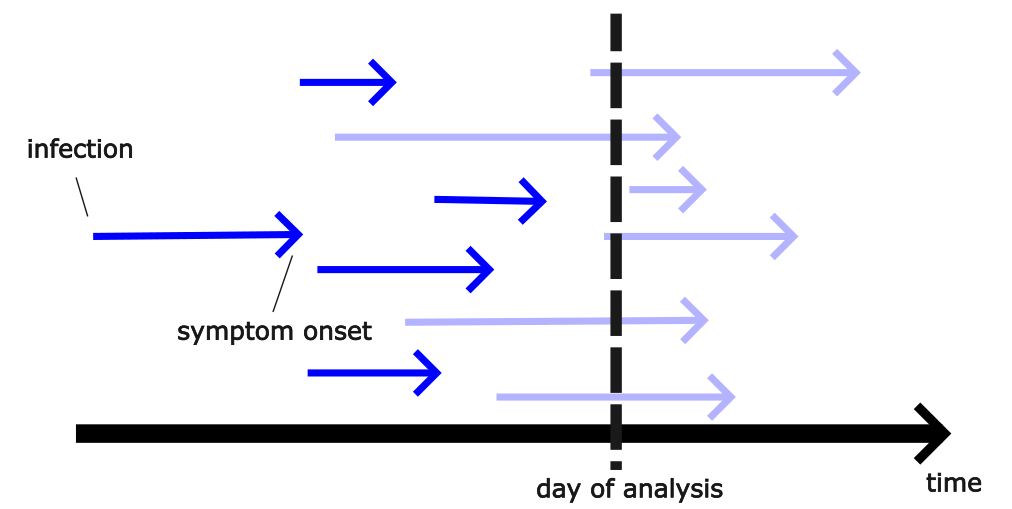
Delay distributions
- delays play a fundamental role in nowcasting (and forecasting)
- we characterise them with probability distributions
- estimating delays requires correction for biases due to
- double interval censoring (daily data)
- right truncation (real-time analysis)
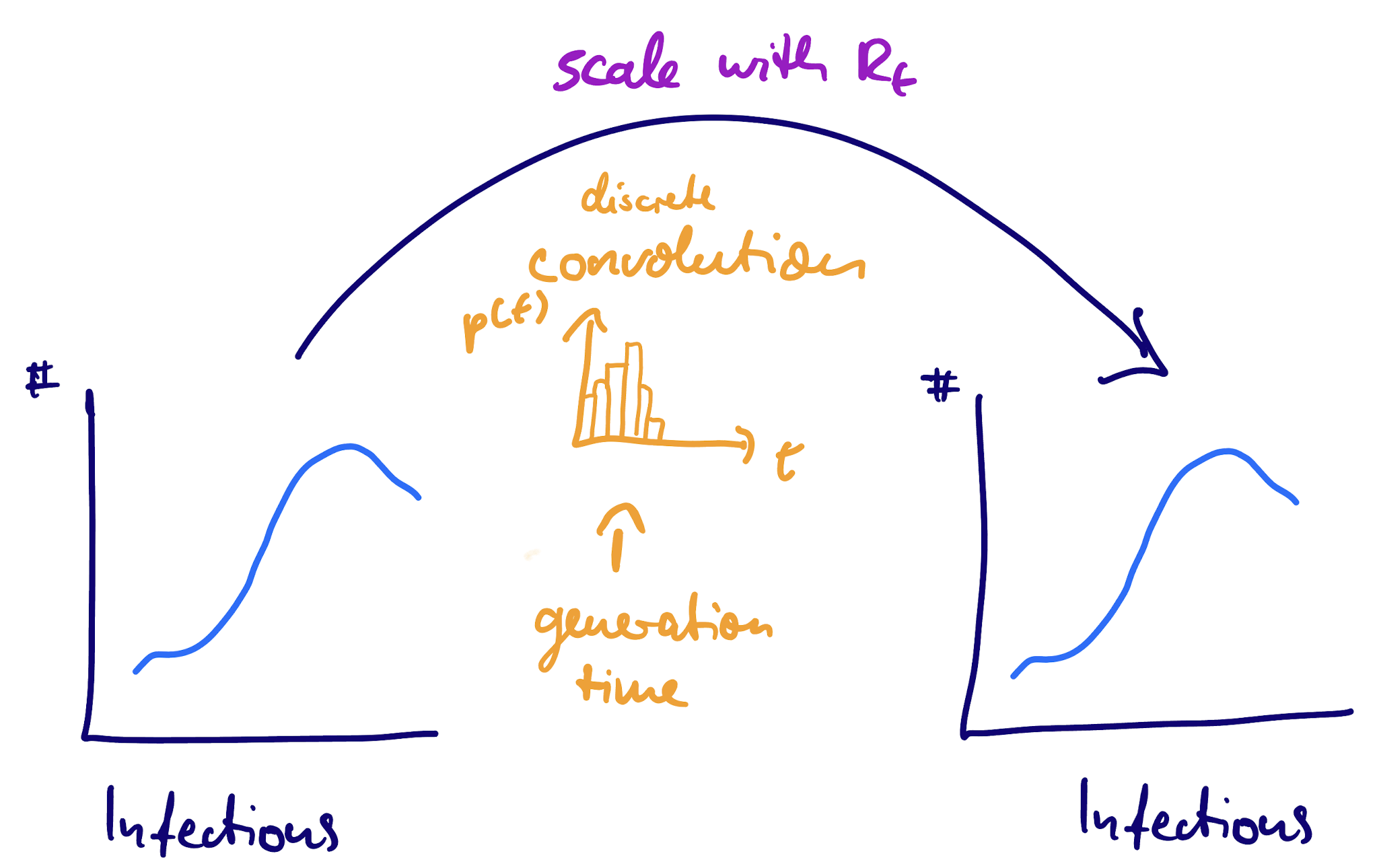
\(R_t\) estimation
- \(R_t\) estimation using the renewal equation is a convolution problem
- improving the generative model leads to improvements in estimation (geometric random walk vs. independent priors)
- generation time is a key delay distribution for transmission dynamics
- understanding the role of the generative model in the estimation of \(R_t\)
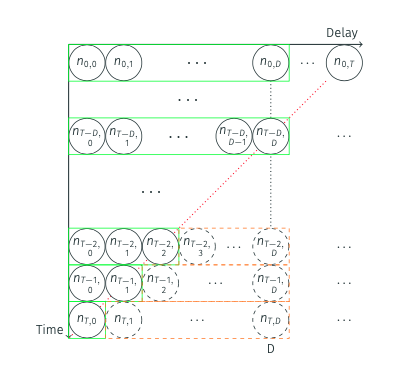
Nowcasting
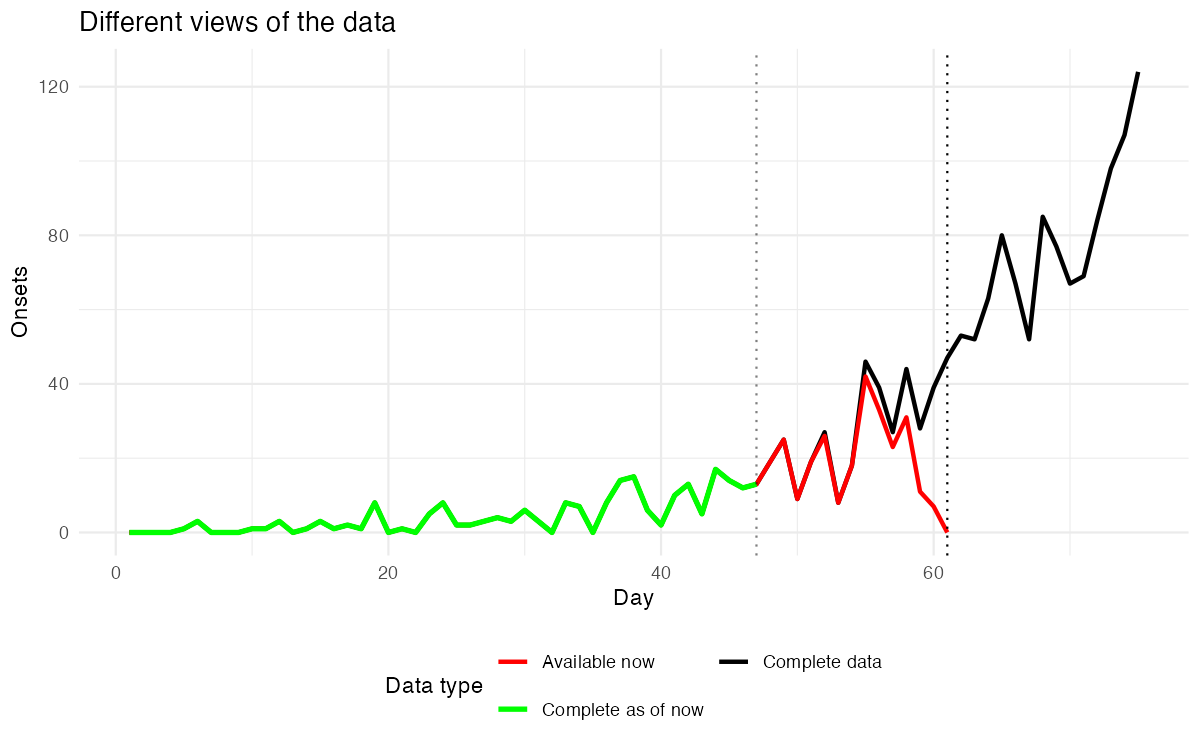
- nowcasting is the task of predicting what data will look once delays have resolved
- it is a right truncation problem (same as discussed before)
- a joint generative model can combine delay estimation, nowcasting and \(R_t\) estimation
From nowcasting to forecasting
- nowcasts feed naturally into forecasts of the near future
- including a nowcast can improve forecasting performance
- we can assess them using proper scoring rules (e.g. CRPS)
Jointly fitting multiple data sources
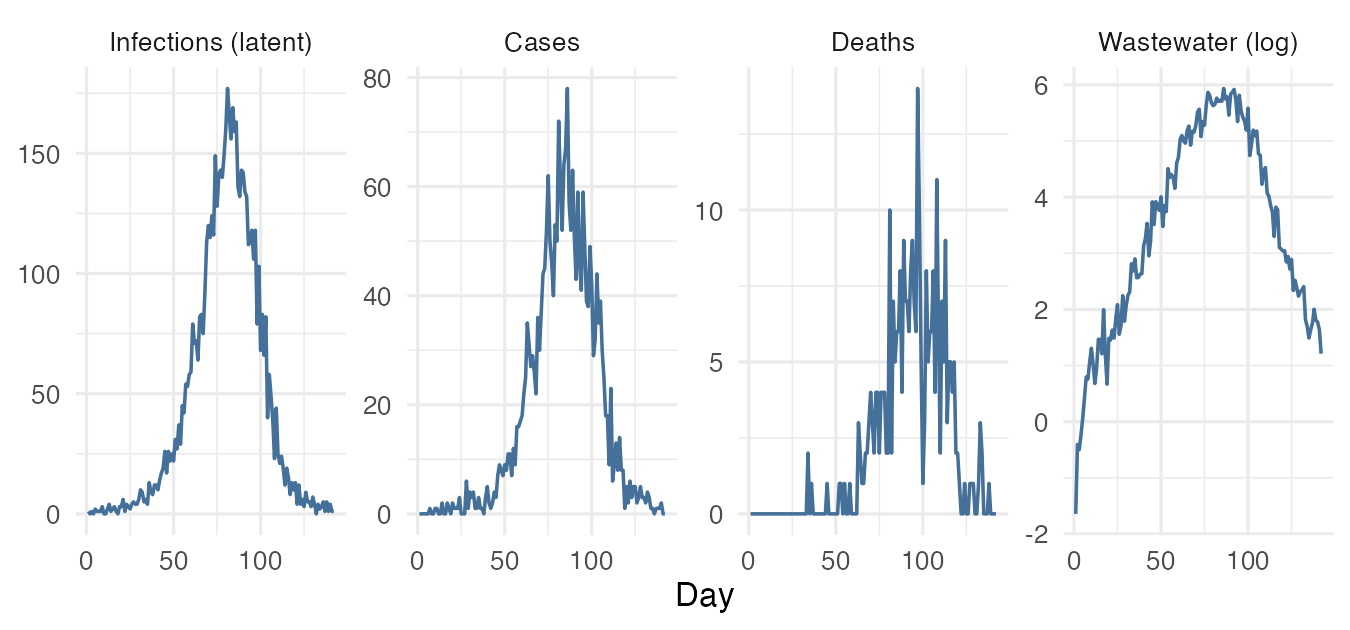
- several data sources are delayed, scaled measurements of the same infections
- a modelling workflow takes us from single-source models to a joint model, checking each step as we build it up
- this lets us build models that use multiple sources of information to improve nowcasts and forecasts
Complex reporting processes
- real reporting has structure beyond a single fixed delay: day-of-week, time-varying, batched, and by strata
- a modular approach (e.g.
epinowcast) generalises our joint model — each component is a swappable module - modelling these complexities can improve the performance and reliability of a nowcast